

Category: Industrial Robotics
-
Getting Started in Robotic Simulation and Offline Programming: An Overview

The creation of robot programs involves Simulation and Offline Programming (OLP). Initial steps include defining project goals, establishing a virtual robotic cell, and setting targets. Next, paths are optimised and simulated to validate robot performance, before being translated into executable programs. Proficiency in OLP is essential for a competitive workforce…
-
Programming Industrial Robots: Why RoboDK is a Game-Changer?

This article discusses Offline Programming (OLP) for industrial robots, focusing on RoboDK, a versatile software solution. RoboDK offers extensive compatibility with over 1,000 robot models and supports programming over 50 robot brands. Its functionality includes CAD/CAM integrations, API capabilities, and custom applications, making it an industry leading tool for enhancing…
-
Offline Programming (OLP) Explained: Benefits, Process, and Essential Skills

Offline programming means creating robotic operation routines in a virtual robot cell on specialist PC software. Once the simulated routines are ready, tested and validated programs are transferred onto robot controllers for execution. This removes the need of moving the physical robot to target positions to create programs.
-
Robotic Simulation: The Benefits of Virtual Planning and Learning

The article emphasises the importance of robot simulation before purchasing physical robots. It details how virtual models allow engineers to test automation processes, understand robot kinematics, and train staff without physical robots. This approach minimises risks and financial investments while facilitating smoother automation adoption by providing critical insights into robotic…
-
Getting Started in Robotics: An Introduction to Tool Calibration
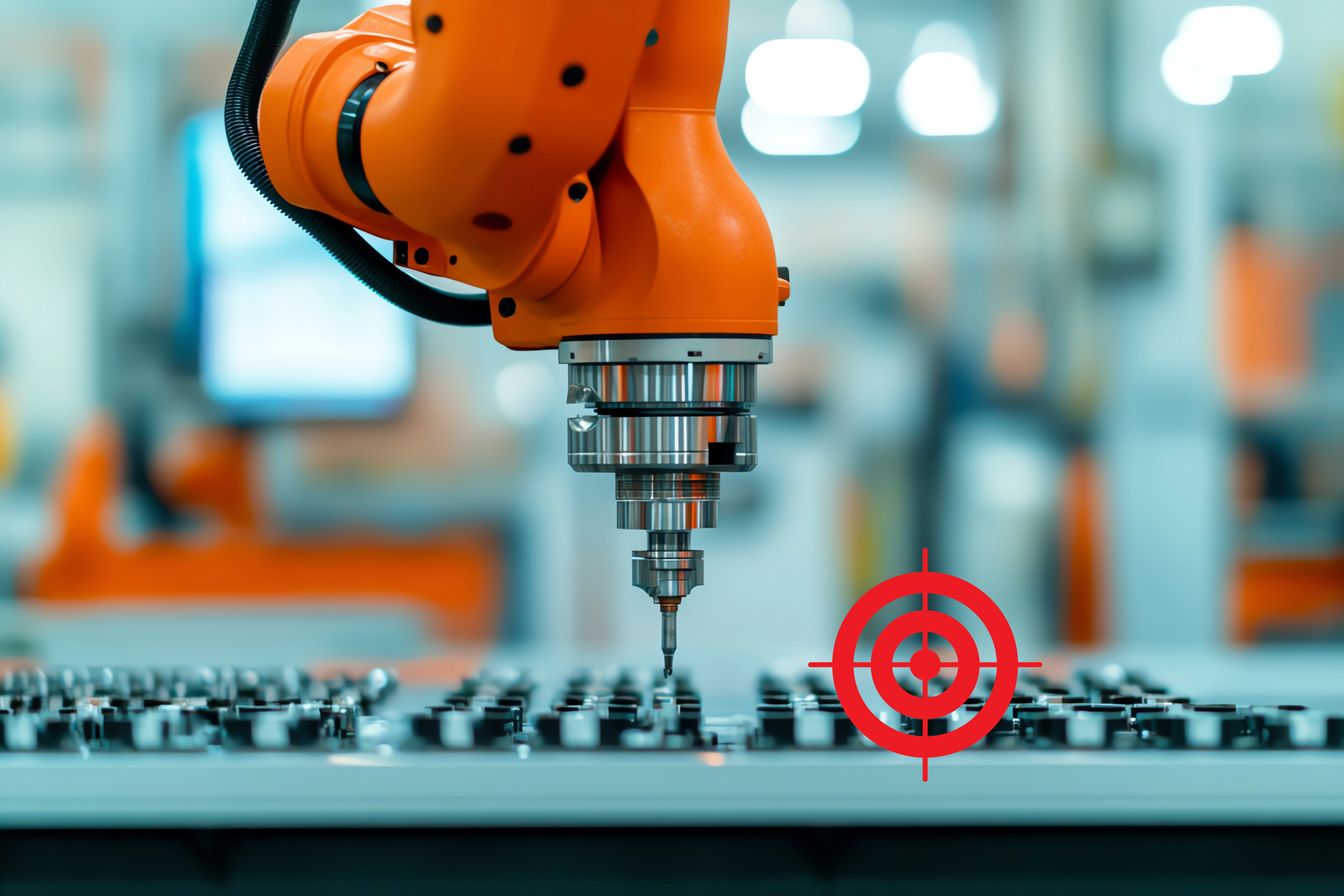
In robotics, tool calibration is an essential process to accurately define the position and orientation of a robot’s tool (also known as the end-effector) in relation to its last joint, or flange. When a robot is manufactured, the controller is only aware of the position and orientation of its last…
-
Robot Singularities: What Are They and How to Avoid Them?

Robot singularities present challenges in industrial robotics, especially during linear or circular movements. Effective path planning and understanding configurations are essential for smooth robot control. Operators must avoid singularities by considering joint and workspace limits. Solutions exist for crossing singularities, but they may compromise efficiency and safety.
-
Control and Programming of an Industrial Robot: Different Types of Motions

This article explains the differences between robot motion types: Joint, Linear, and Circular moves, defined in Joint and Cartesian spaces. Joint moves allow flexible trajectories, while Linear and Circular moves offer precise path control. Understanding these distinctions enhances the programming and performance optimisation of industrial robots in automation tasks.
-
Programming Basics and Different Ways to Program an Industrial Robot

Programming involves creating instructions for machines to execute automated tasks, often used in industrial robots. Manual and offline programming methods exist, with offline offering more flexibility and efficiency. Advances in adaptive programming, utilising AI and sensors, enhance robot usability. Skills can be transferable when generic robot programming tools are used.
-
Collaborative Robots: Are They Replacing Industrial Robots?

Collaborative robots (cobots) have revolutionized the industrial robotics market since UR5’s launch in 2008. This article explores cobots, emphasising on their attributes compared to traditional industrial robots. Recent advancements have increased their payload capacities, enabling broader applications and prompting changes in safety standards and automation.
-
Understanding Technical Vocabulary in Industrial Robotics: Part 1

This article provides an overview of terms related to the mechanical structure of industrial robots, especially 6-axis arms. It identifies key components and details the joints and coordinate systems essential for understanding robotic operations. This aims to assist beginners in mastering robotics vocabulary.
You must be logged in to post a comment.